Heritage
Three histories, layered together
The racecourse that kept Eastern Cape racing alive by moving, adapting, and refusing to become just a memory.
Earliest organised racing at Cradock Place
Port Elizabeth Turf Club formed at Dreyer's Hotel
Jockey Club of South Africa born in PE
Current Fairview opens at Greenbushes
A LONGER STORY THAN THE ADDRESS SUGGESTS
Fairview is easy to flatten into “opened in 1977.” That misses the point.
The current Fairview Racecourse is the modern venue. The Fairview racing tradition is much older. It runs from British garrison horses and early colonial Port Elizabeth racing, through the old Cape Road course, through the move to Greenbushes in 1977, through the closure of Arlington and the absorption of its training community, into the South Africa-first Polytrack era, and now into 4Racing. Official tourism material puts irregular racing in the city by around 1850, with formal racing from 1857.
The point is not the address. The point is the survival. Eastern Cape racing kept moving, kept adapting, and kept finding a piece of ground to keep going on. The current Fairview, on Draaifontein Road in Uitenhage Farms, is where that tradition relocated, regrouped and rebuilt itself.
1815
The Eastern Cape gets there first
Uitenhage forms a Turf Club. The Eastern Cape's racing tradition predates Johannesburg's by more than seventy years, and predates the formal Port Elizabeth Turf Club by more than four decades.
1817
Cradock Place
Frederick Korsten matches his horses against officers from Fort Frederick on the Papenkuils River. Governor Sir John Cradock himself is a known racing man. This is the earliest reliably-recorded organised racing in Port Elizabeth.
c.1850
Irregular PE racing
Official tourism material places irregular racing in the city by around this date. Eastern Cape race-day culture is taking shape on open ground around the growing port.
1857
The Port Elizabeth Turf Club is revived
On 13 July 1857, a meeting at Dreyer's Hotel revives the Port Elizabeth Turf Club. The new club holds its meetings at Fairview Estate — a large farm on the old Cape Road. The Fairview name enters racing here.
1882
The Jockey Club is born in Port Elizabeth
The Jockey Club of South Africa is formed in Port Elizabeth, with H.B. Christian — central to the local racing revival — its first chairman. Eastern Cape racing is not a regional outpost; it is the administrative starting point of the South African sport.
1896
New Brighton joins the racing landscape
The New Brighton Sporting Club is formed. PE's racing world widens across multiple sites in the city — open land, bush, hunting rights and race meetings tangled up in the same space.
1977
The move to Greenbushes
The current Fairview Racecourse opens at Greenbushes. The old course on Cape Road is given up; the racing infrastructure relocates west of the city, to Draaifontein Road, Uitenhage Farms — where Fairview has been ever since.
2007
Arlington trainers move to Fairview
A new stabling complex is completed at Fairview Greenbushes; trainers based at Arlington relocate. Fairview becomes the Eastern Cape head office of Phumelela Gaming and Leisure and the city's training and racing hub.
2012-2013
The Polytrack
Phumelela commits to installing a Polytrack at Fairview — the first South African racecourse with the world-renowned all-weather surface. The R36-million track plus a R4-million grandstand upgrade comes in around R40 million. Martin Collins, the supplier, later describes the project as one of their most challenging: the site needed stabilising because it was effectively flooded marshland.
2017
40 years at Greenbushes
The current venue marks four decades since the move from Cape Road. Fairview is now the city's only thoroughbred racecourse and the Eastern Cape's main racing stage.
2021
The 4Racing era begins
With Phumelela in business rescue, the Oppenheimer family's Mary Oppenheimer Daughters underwrites the rescue. Operating licences — including approvals from the Eastern Cape Gambling Board — transfer to 4Racing in late 2021. On 1 December 2021, 4Racing takes over the administration of much of South African racing. Fairview joins a national network alongside Turffontein, Vaal and Randjesfontein.
2024
A local-trainer Algoa Cup, fifteen years on
FireAlley wins the Betway Algoa Cup for local trainer Jacques Strydom — his first Algoa Cup since Surfin' USA in 2009. The Algoa Cup remains the day where the East Cape racing community gathers.
2025
The East Cape Triple Crown
Alan Greeff's My Best Shot wins the East Cape Derby and completes all three legs of the East Cape Sophomore Challenge — the first horse to win the East Cape Triple Crown.
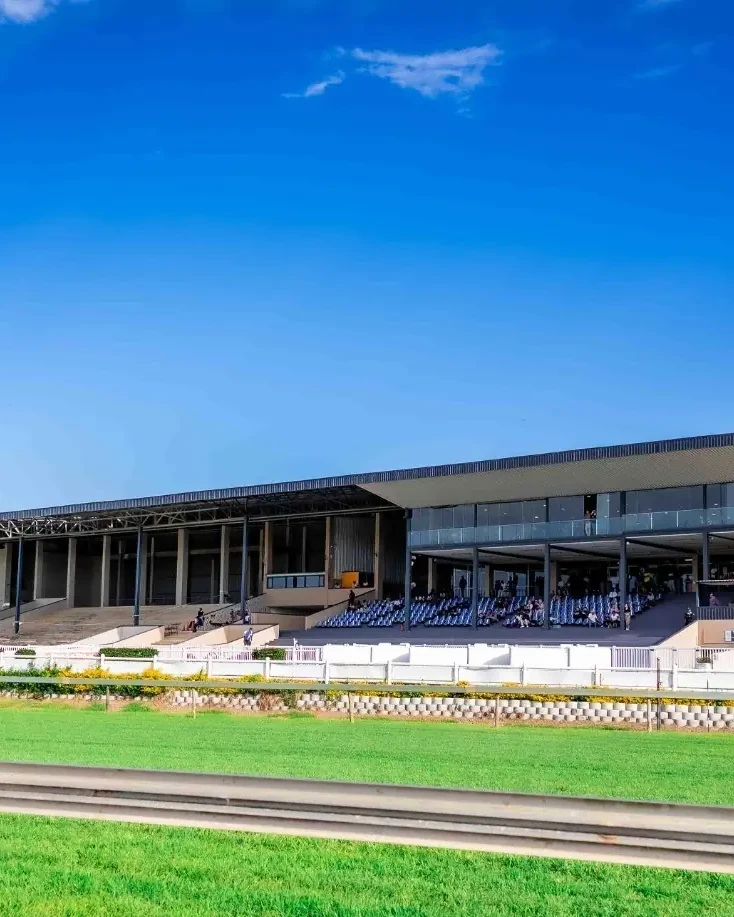
The Jockey Club was born here, in 1882
The Jockey Club of South Africa was formed in Port Elizabeth in 1882, with H.B. Christian — central to the local racing revival — its first chairman. The Phoenix Hotel is named in some accounts as the meeting site. The administrative birth of the South African sport happened in a Port Elizabeth hotel, not a Johannesburg one. It is part of why Fairview hospitality and PE racing memory still carry the H.B. Christian name. Eastern Cape racing is older than its later geography suggests, and the formal architecture of the South African sport was put in place here before it was put in place anywhere else.
Three earthy fragments of old PE racing
Fairview's folklore is not ghost-and-war stories. It is land, weather, and the fact that racing in this city kept moving.
Cradock Place
In 1817, Frederick Korsten matched his horses against Fort Frederick officers on the Papenkuils River, with Governor Sir John Cradock himself a known racing man. The earliest thread of organised racing in Port Elizabeth is older than the city's modern sporting infrastructure — it predates the Fairview name itself by four decades.
From Cape Road to Greenacres
The old Fairview Racecourse stood where Greenacres Shopping Centre now stands. If you want to imagine old Fairview, do not look first at Greenbushes — look at Greenacres on Cape Road. A working racecourse became suburban retail land, while the racing memory was lifted out and moved west. The city grew over the old footprint.
The bush, the buck, and the racecourse
In 1896, the New Brighton Sporting Club was formed. A later court dispute involved hunting and shooting rights over Deal Party land — imported buck, pheasants and partridges, with complaints that racecourse activity and clearing bush had disturbed the game. Early PE racing sat inside a rougher landscape of farms, soldiers and disputes over land use.
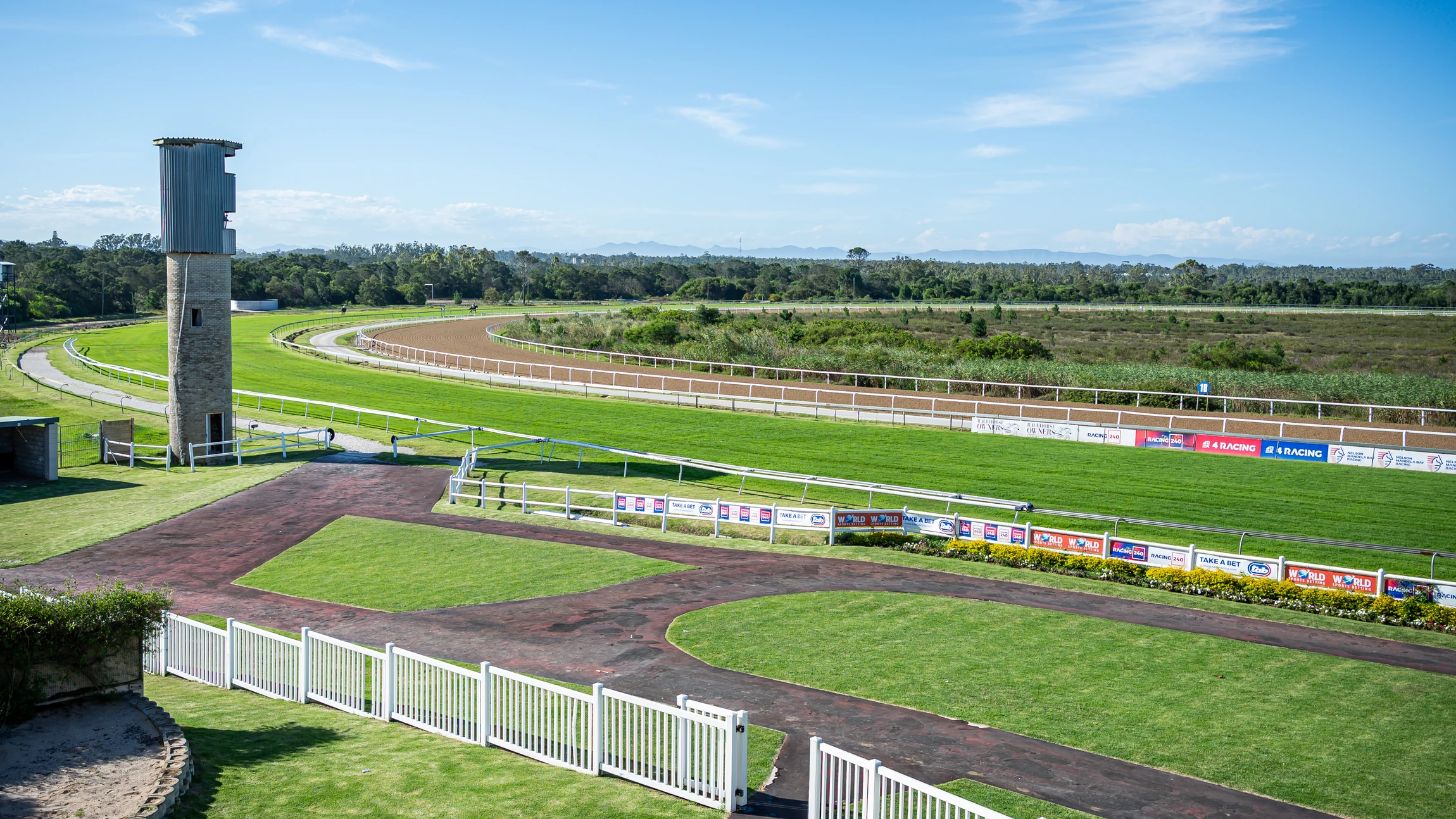
A punter's course — turf and Polytrack
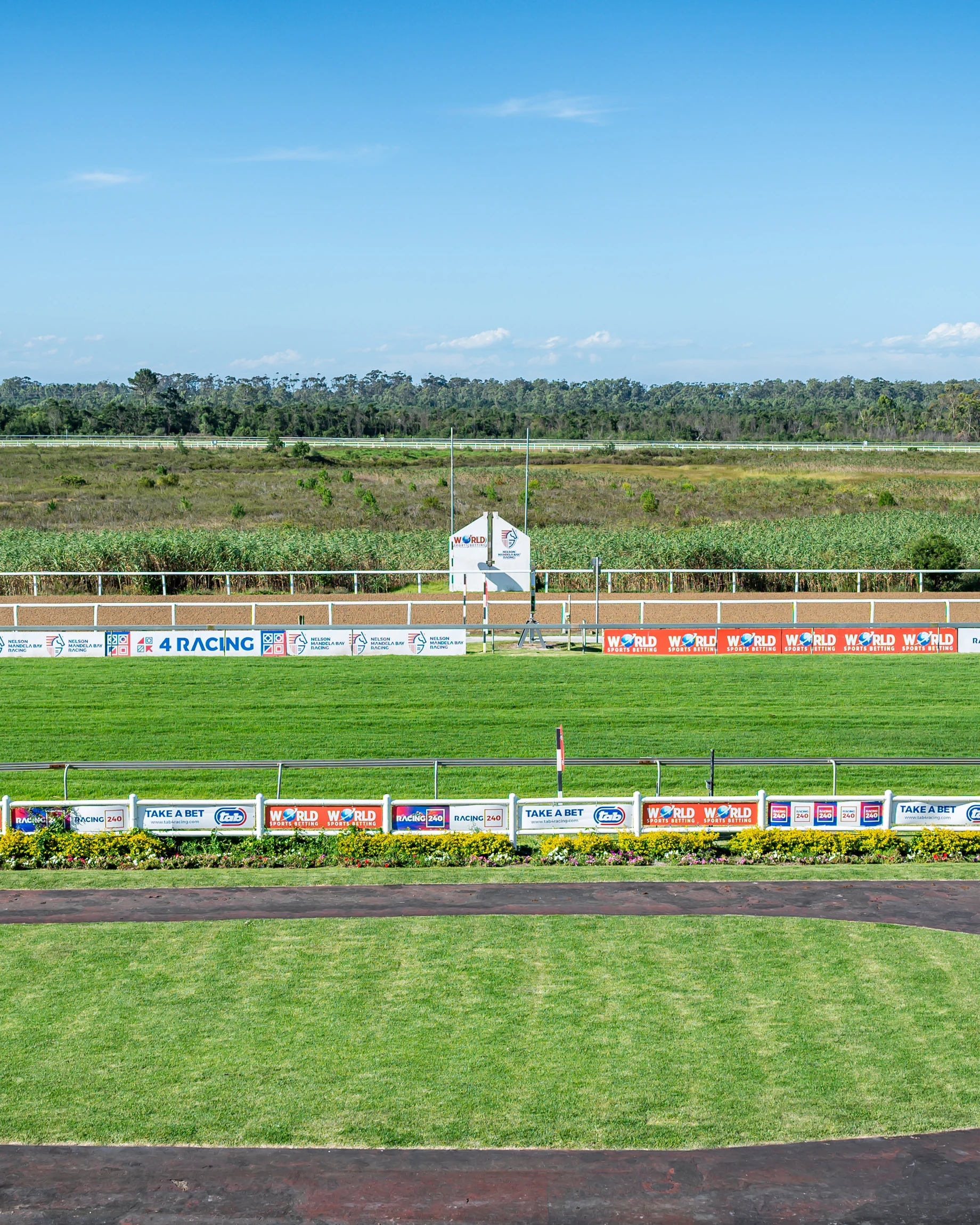
The outer turf course is a 2,700-metre near-oval with a straight chute for races up to 1,200 metres. The chute is mostly downhill, and higher draws can be favoured. Beyond 1,200 metres, racing goes right-handed around the turn with an 800-metre run-in, and low draws are usually better over 1,400 and 1,600 metres. The inner Polytrack is a smaller 1,800-metre near-oval with a 400-metre run-in, also right-handed. Like every coastal course, Fairview drains slowly and turf can stay soft after rain. That is the essence of Fairview form study — surface, draw, weather, the long run-in, and whether the horse can quicken off it.
2013 — A SOUTH AFRICA FIRST
A Polytrack on flooded marshland.
The site was flooded marshland when we took it over. Horse & Hound later called it one of Martin Collins' most challenging Polytrack projects — built on a former marsh on the South African coast.
Reported during the build of South Africa's first all-weather racing surface
The economics behind the build were as important as the engineering. Eastern Cape racing was running close to seventy meetings a year, and a turf-only programme could carry only about half that. Drought, heavy rain and abandonments were costing fixtures the city could not afford to lose. The Polytrack — the first in South Africa — doubled the venue’s capacity, reduced abandonments, and cut the programme’s water dependency. It came in at around R40 million. Fairview is the only South African racecourse where every racing weekend can fall back on a true all-weather surface.
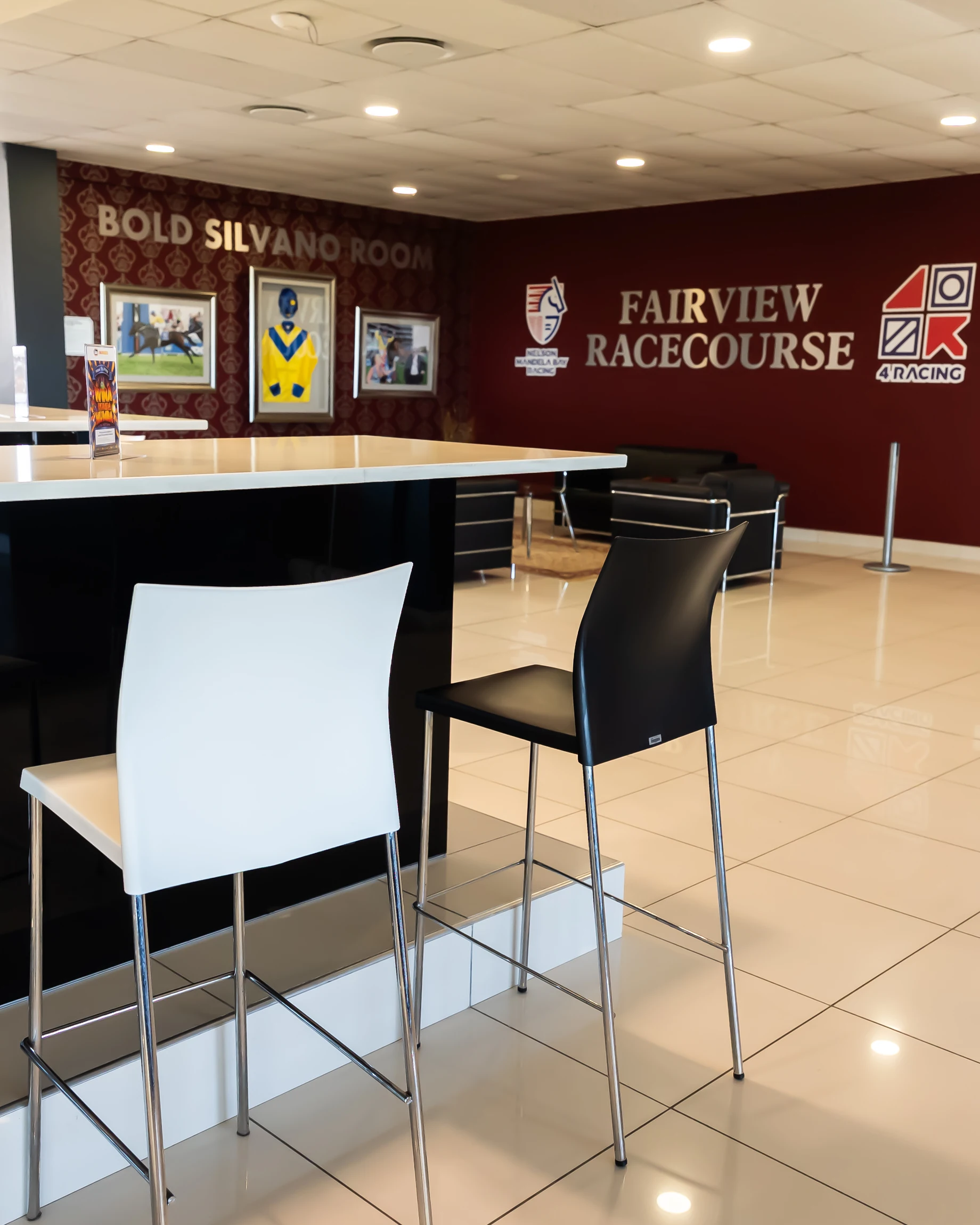
The Bold Silvano Room
Bold Silvano was bred at Ascot Stud in Port Elizabeth and trained at Fairview by Gavin Smith before joining Mike de Kock and winning the 2010 Vodacom Durban July — South African racing's biggest day. Fairview's signature hospitality space carries his name. It is one of the cleanest examples of why Fairview matters to the broader South African racing story: a horse with Eastern Cape roots reached the top, and the venue keeps that link visible to anyone who walks through the door.
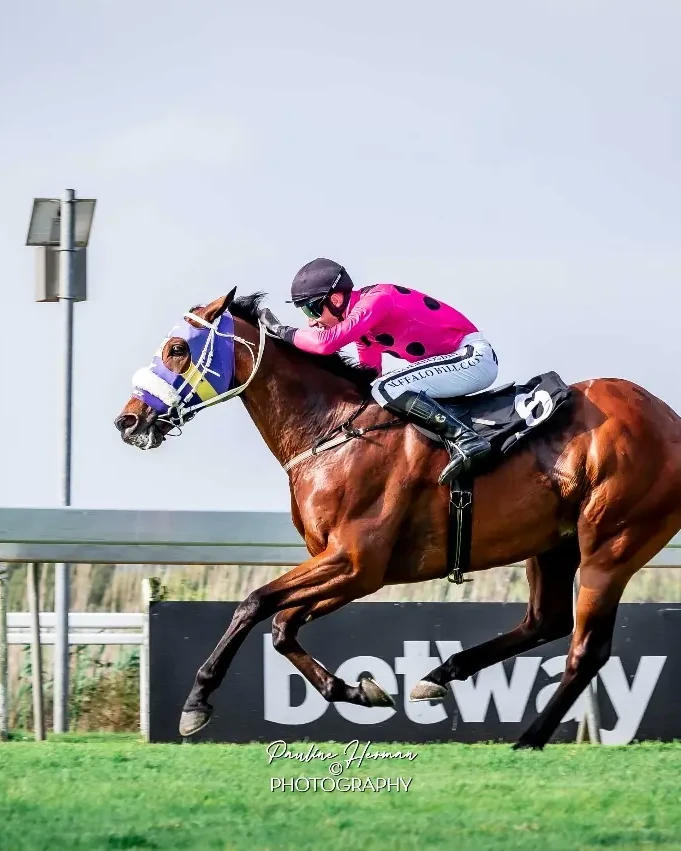
The Algoa Cup — the city's signature day
The Algoa Cup is the race day most strongly attached to Fairview's public identity. Its 2023 running was the 103rd, and the festival has grown into a three-day Eastern Cape calendar event — racing, hospitality, the grooms' soccer final, fashion, music, marimba performances and a full Bold Silvano Room. In 2024, FireAlley won the Algoa Cup for local trainer Jacques Strydom, fifteen years after his previous Algoa Cup with Surfin' USA in 2009 — a result that sits squarely inside the Fairview tradition: the Eastern Cape racing community gathered, the local trainer winning, the city's day.
Some of us are still annoyed they cut the trip from 3,600 to 3,200 metres.
Shannon Devoy, who won the 2012 Port Elizabeth Gold Cup on Campo De Santana — the PE Gold Cup remains a stayer's race
A LOCAL DYNASTY
Smith and Greeff.
Modern Fairview is impossible to understand without the Smith and Greeff training families. The rivalry between Gavin Smith and Alan Greeff defined the East Cape racing scene for decades, and it had a generational backstory: Gavin’s father Andy Smith and Alan’s father Stanley Greeff were also dominant Port Elizabeth racing figures.
Gavin Smith trained more than 3,000 winners, was East Cape Champion Trainer thirteen times, took over from his father in 1996, and stayed in PE despite the pull of bigger-city stables. His best horse — Bold Silvano — eventually went to Mike de Kock and won the Durban July. Alan Greeff is the other dominant force, and the season that closed the loop was 2025: at the East Cape Awards in the Bold Silvano Room, Greeff’s runners collected six equine titles, his My Best Shot was named Horse of the Season, and Greeff was Champion Trainer.
2021 — AND ON
Survival, then a national network.
The economics that brought Phumelela to business rescue in 2020 were the same economics Fairview had been navigating for decades: a regional racecourse on the South African coast, weather-exposed and fixture-pressured, with a programme that betting revenue alone was never going to cover. The Oppenheimer family’s Mary Oppenheimer Daughters underwrote the rescue. Operating licences transferred to 4Racing in late 2021 — the Eastern Cape Gambling Board among the regulators that signed off — and on 1 December 2021, 4Racing took over the administration of much of South African racing.
Fairview now sits inside a national racing network alongside Turffontein, Vaal and Randjesfontein. It still carries its own Eastern Cape identity. The signature October Algoa Cup is on the 4Racing calendar; Fairview Twilight is part of the year-round programme; Friday racing remains the city’s living racing pulse. Free entry. Safe parking. Marimba on the lawn. The Bold Silvano Room. A working racecourse, not a museum.
Fairview’s pride is not in mystery or ceremony. It is in survival. The original PE course is gone — Cape Road is a shopping centre now. New Brighton’s racecourse and the rest of the old Eastern Cape racing landscape are gone too. What is left is the racecourse that kept moving, absorbed Arlington’s training community, built the country’s first Polytrack on flooded marshland, weathered the Phumelela collapse, and carried on. That is what the racing community in Gqeberha protects, weekend after weekend.