Heritage
140 years on the same ground
Johannesburg, gold, war, sport, folklore — Turffontein is the one piece of ground where all of it stacked up, and it is still standing.
First Johannesburg Turf Club meeting
99-year lease secured for the course
Foundations laid for the original grandstands
Blue Plaque from the Heritage Foundation
JOHANNESBURG IN MINIATURE
A racecourse that was the city, in miniature.
Turffontein is not just an old racecourse. It is one of those Johannesburg places where sport, gold, war, gambling, suburb-making, folklore and modern betting infrastructure all sit on top of each other. To stand on the rail at Turffontein is to stand on top of an entire chapter of South African history — most of it still moving.
The story has three pillars that the Johannesburg Heritage Foundation marked when it awarded the racecourse a Blue Plaque in 2016: racing, deep-level mining, and the South African War concentration camp. None of those pillars cancels the others. They are layered on the same ground, in that order, and they explain why Turffontein still feels different from any other course in the country.
1850s
Before the racecourse
The name Turffontein predates the track. It comes from the old farm name — most often translated as clay fountain or clay spring, not turf in the racing sense. The land was associated with Abraham Smit from the 1850s; later it passed in part to Paul Andries Ras.
1886
Johannesburg founded
Gold is found on the Witwatersrand. Within months, an entire mining city is rising out of the veld.
1887
Racing arrives almost immediately
On 15-17 June 1887 the Johannesburg Turf Club holds its inaugural three-day meeting. The headline event is the Johannesburg Turf Club Handicap, worth £250 over two miles. Around 3,000 people attend — a serious crowd for a rough new mining town. This meeting is the ancestor of today's Summer Cup.
1889
Turffontein becomes the home ground
The Johannesburg Turf Club enters into a 99-year lease with Paul Andries Ras for the Turffontein ground.
1892-1893
The freehold and the grandstand
Ras sells the freehold title of the racecourse ground to the club in 1892. In 1893 the foundations of the original grandstands go in. This is why some heritage sources date the racecourse from 1892 while racing histories use 1887 — both are correct, for different things.
1897
Gold beneath the turf
The Turf Club pegs the entire course for mining, partly so no one else can do it first. Significant gold is found about 1.5 km below the racecourse. Deep-level mining later makes it possible for mining activity to continue beneath the property while racing continues above. Few racecourses anywhere have been part of the gold story quite this literally.
1900-1902
The wartime camp
During the South African War the racecourse is taken over as part of the British concentration camp system. Heritage assessments describe Turffontein as the largest concentration camp in the Transvaal, with women and children initially housed inside the grandstands.
1902
Racing returns
By August 1902, race meetings are running again at Turffontein while the last camp inmates are still in unusual circumstances on the property. The camp closes by the end of October 1902. The site goes back to being a racecourse — and stays one for the next century and counting.
1988
The Hennenman memorial
After the Hennenman air disaster of April 1988, in which 24 people lost their lives — including 13 jockeys travelling for a postponed meeting — the Highveld racing community adopts an annual memorial fixture. Turffontein has carried the memory ever since.
1997
Horse Chestnut debuts
On 20 December 1997 a then-unknown two-year-old wins his maiden over 1,000 m at Turffontein by close to six lengths. He goes on to become the first horse to win the South African Triple Crown.
2006-2007
Newmarket closes; Turffontein expands
With the closure and sale of Newmarket Racecourse, Turffontein absorbs the Highveld racing calendar. A R40-million programme installs floodlights for both the Standside and Inside tracks, refreshes facilities and introduces a sports-bar-style venue. Turffontein becomes a true night-racing destination.
2016
Blue Plaque
The Johannesburg Heritage Foundation awards Turffontein Racecourse a Blue Plaque, formally recognising the three pillars of its history: racing, deep-level mining, and the South African War.
2021
The 4Racing era begins
With Phumelela — the operator that had run South African racing for decades — in business rescue, the Oppenheimer family's Mary Oppenheimer Daughters underwrites the rescue. The Gauteng Gambling Board approves the transfer of Totalizator, Bookmaker and Race Meeting licences to 4Racing in November 2021. On 1 December 2021, 4Racing takes over the administration of much of South African racing. Turffontein is the operator address.
1897 — GOLD BENEATH THE TURF
The mine beneath the track.
In 1897 the Turf Club pegged the entire course for mining — partly defensive, to stop someone else from doing it first. Significant gold was found, but deep: roughly 1.5 km below the racecourse. Deep-level mining later made it possible for mining activity to continue beneath the property while racing continued above.
From the Blue Plaque heritage citation
It is the kind of detail you only find in Johannesburg. Horses thundering over the turf, miners working far below, on the same coordinates. Few racecourses anywhere have been part of the gold story quite this literally — and it is one of the three pillars the Johannesburg Heritage Foundation cited when it awarded Turffontein its Blue Plaque in 2016.
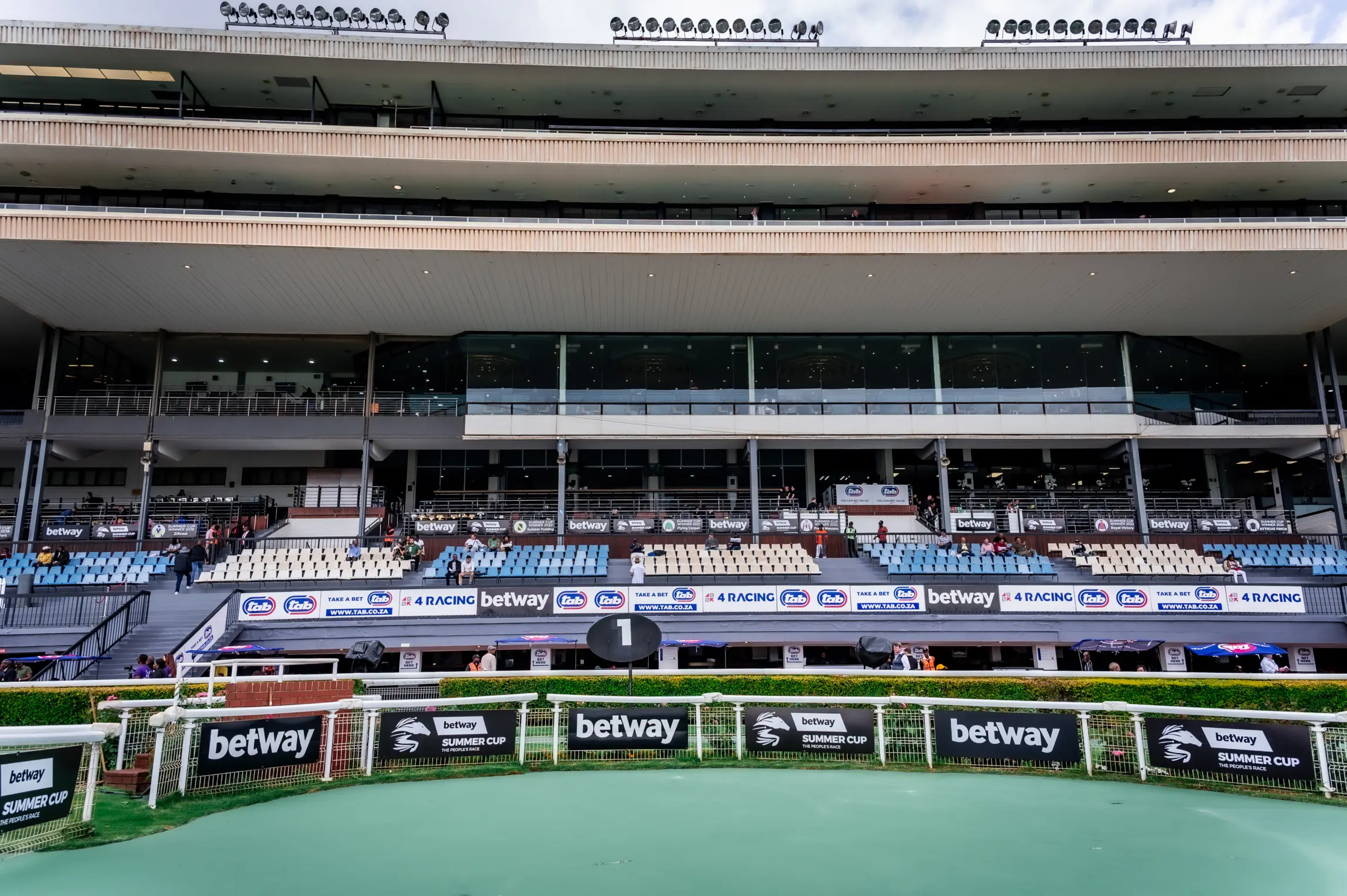
The dark chapter — the camp years
During the South African War the racecourse stopped being a sporting venue. The Turffontein camp was the Johannesburg camp, and is described as unusual because it was urban — most camps were not. Women and children were initially housed inside the grandstands; later, bell tents and sheds were added. Heritage sources call it the largest concentration camp in the Transvaal, accommodating more than 5,000 Boer women and children. Estimates of those who died there sit around 700, mostly children — though, as the heritage assessment itself notes, exact figures are difficult: records were destroyed or incomplete. One human story stands out: Gerrit Broeksma, a Dutch-born Johannesburg public prosecutor who tried to report the conditions to Britain and Europe, was tried and executed in September 1901. The wartime years are not racing history. They are part of the racecourse's history, and they are kept in plain view.
Folklore that survived the century
Three stories that everyone in the racing world has heard, that everyone half-believes, and that local heritage writers preserved long enough that there is still something there to half-believe.
The firemen in the gum trees
The old Turffontein Fire Station stood across the road from the racecourse. On race days the firemen — by long-told account — climbed a platform between two tall gum trees and used signals to tell accomplices which horses were leading. Those accomplices then rushed to place last-minute bets at Tattersalls in Jeppestown before bookmakers caught on. The original gums are gone. Replacement gums and old stumps are still part of the story.
The telegram that delayed a raid
Racing folklore says Cecil Rhodes once sent a telegram postponing the Jameson Raid because it would clash with Race Week at Turffontein. It is the kind of story that sounds invented, lives on as racing lore rather than as clean military-history fact — and is exactly the right size for a racecourse that has always been at the centre of Johannesburg's social calendar.
Biplanes and crowds
The course was occasionally leased to the Aeronautical Society of South Africa for early biplane flying attempts, which drew large crowds. Horses, bookmakers, flying machines and money — Turffontein has always been one of Johannesburg's public-spectacle spaces.
The track itself — why punters still respect it
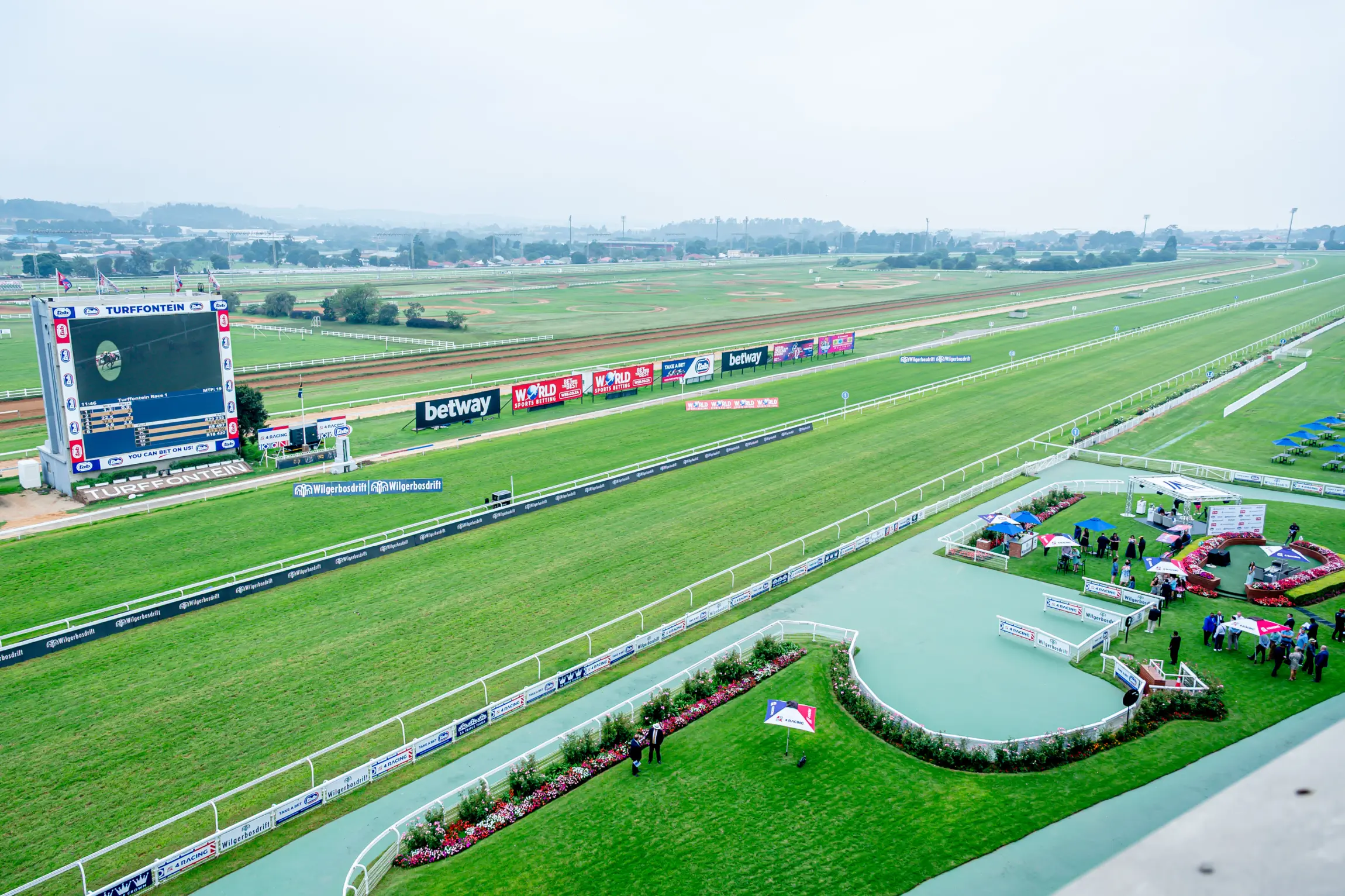
Turffontein is one of South Africa's more testing racetracks. The Standside is a 2,700-metre oval; the Inside track is roughly 2,500 metres. Races are run clockwise. The defining feature is the stiff climb from about the 1,200-metre mark to the final turn — which is why Turffontein is a stamina test, not a simple speed strip. The 1,200-metre straight joins the round course around the 800-metre mark, and the uphill nature means horses coming from off the pace still have a chance. Soft horses get found out here. Stayers get rewarded. That is part of the course's identity.
Horse Chestnut and the Summer Cup roll of honour
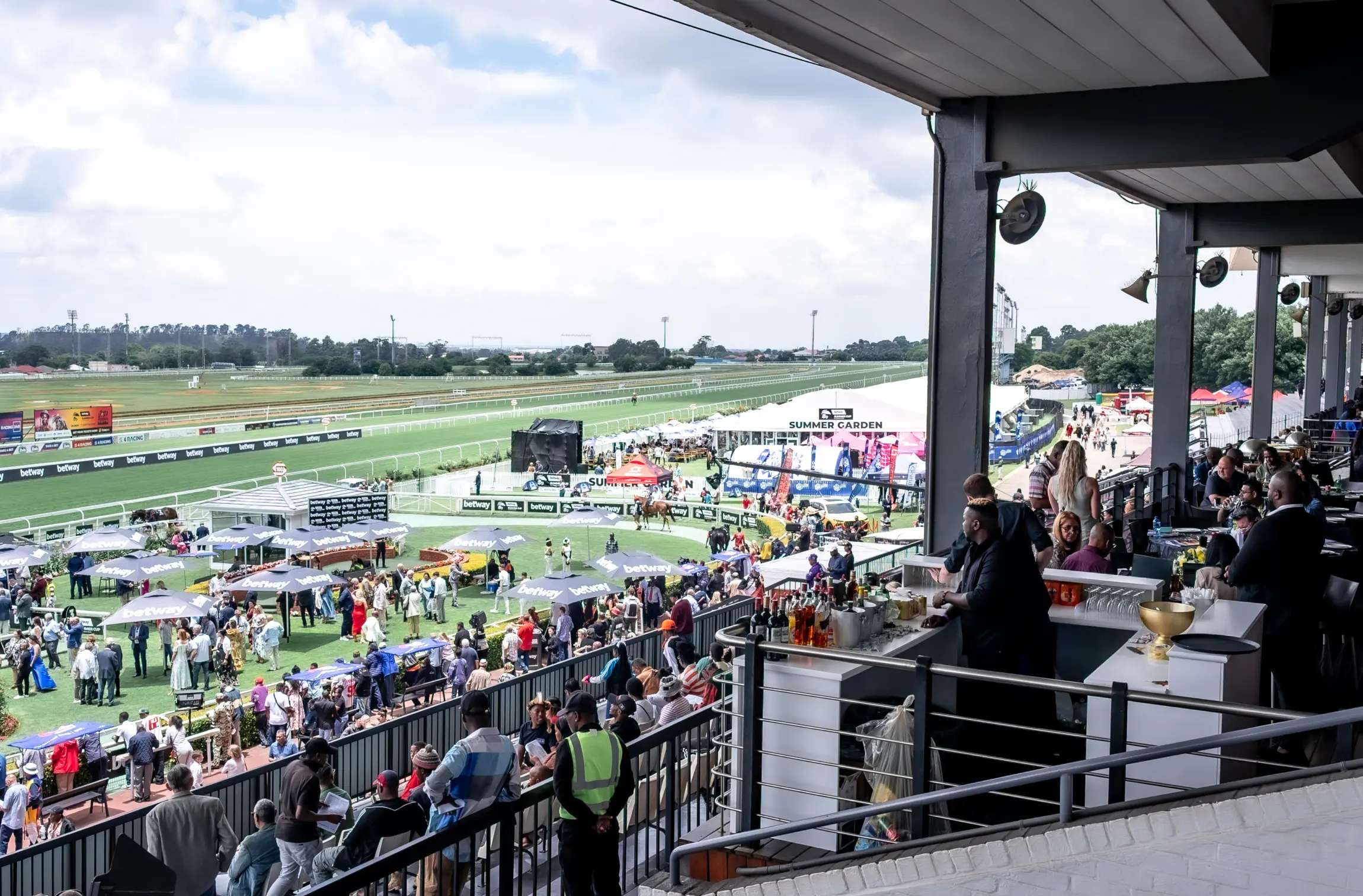
Turffontein's modern mythology has a star: Horse Chestnut. He made his debut over 1,000 metres at Turffontein on 20 December 1997, winning by nearly six lengths. He went on to become the first horse to win the South African Triple Crown — taking the SA Classic and then the SA Derby at Turffontein by a massive margin. The Summer Cup roll itself carries names that racing people still recognise: Java, who won three times in the 1950s; Elevation, who completed a hat-trick in the 1970s; El Picha, Master Sabina, Summer Pudding. The race has carried sponsors and changing names — Holiday Inns, Sun International, Administrator's Champion Stakes, Administrator's Cup, Premier's Cup, Champions Stakes — before settling back into the Summer Cup name in the modern era. The day itself has always carried a Joburg identity. Old descriptions call it the city's first big day out — and that is what it has stayed.
Every April, the Highveld remembers Hennenman. Twenty-four lives, including thirteen jockeys, were lost in the 1988 air disaster. The annual memorial meeting at Turffontein is how the racing community keeps that loss in the calendar — quietly, and with respect.
On the racing community's annual remembrance
From Newmarket to night racing
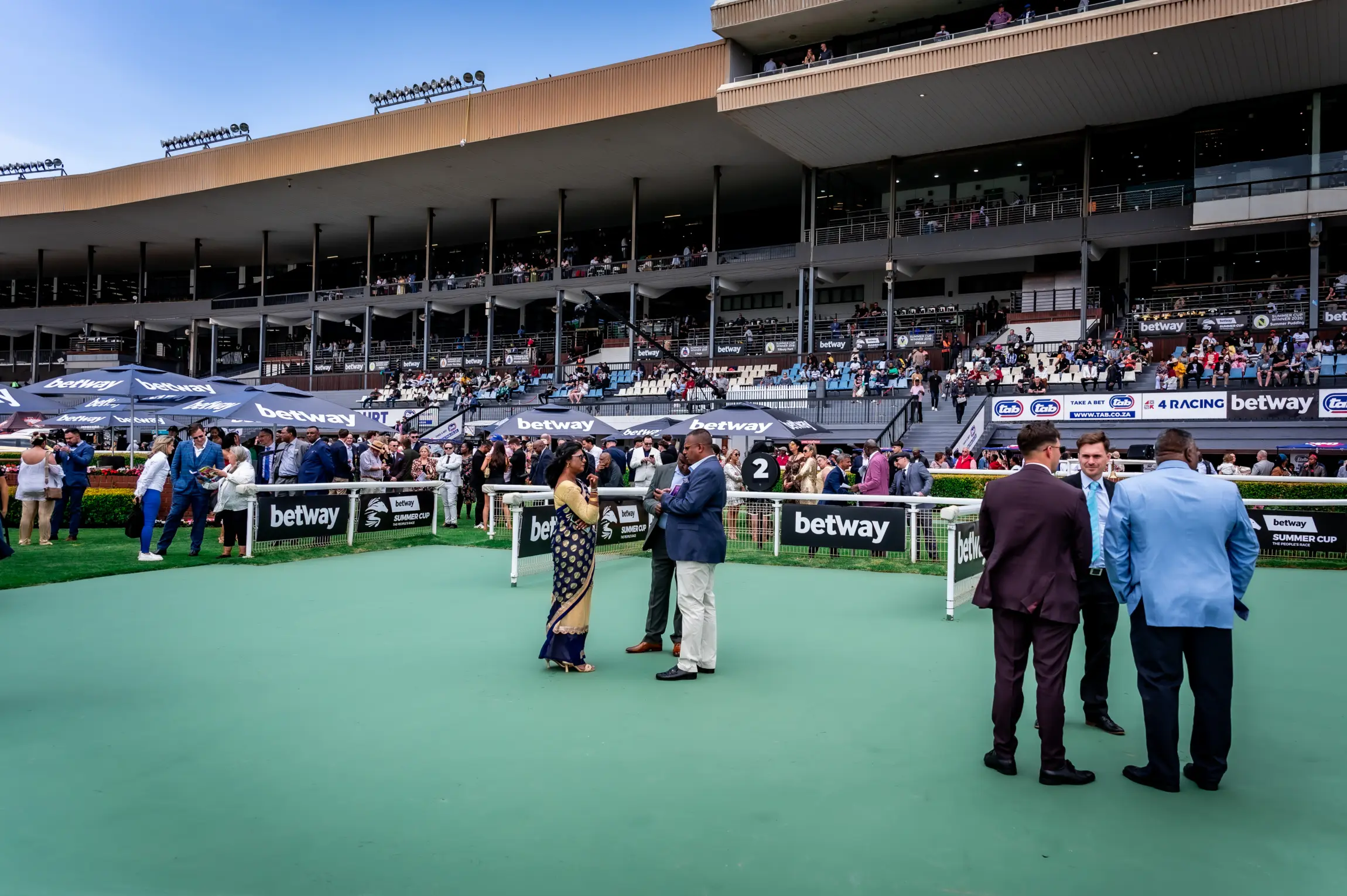
The closure and sale of Newmarket Racecourse in early 2007 changed Gauteng racing's geography. Turffontein absorbed the calendar. Ahead of that shift, in 2006, Phumelela announced that Turffontein would be redeveloped as a premier night-racing venue using a R40-million settlement linked to Newmarket. Floodlights went up on both the Standside and Inside tracks. Racing surfaces were upgraded. Trackside facilities were refreshed. A sports-bar-style venue was added to bring younger racegoers into the rhythm of the meeting. The result is the Turffontein you walk into today: an old course, fully lit, working both day and night.
2021 — AND ON
The rescue, and the mandate that came with it.
By 2020, the economics of South African horse racing were no longer sustainable on betting revenue alone. The cost of operating four racecourses, a national racing programme, prize money and the wider breeding-and-training ecosystem had grown well beyond what the wager pool could carry. Phumelela — the operator that had run South African racing for decades — entered business rescue, and the heritage of organised horse racing in this country was genuinely at risk.
What kept it standing was the Oppenheimer family. Mary Oppenheimer Daughters — the investment vehicle led by Mary Slack, daughter of the late Harry and Bridget Oppenheimer — stepped in with the financial backing and the appetite to take over the operation. The family’s connection to South African racing runs deep: Bridget Oppenheimer was widely known as the Queen Mum of South African racing, and the family’s Wilgerbosdrift and Mauritzfontein studs have been part of the country’s breeding establishment for generations.
Two of Turffontein’s headline graded races still carry the family’s marks — the Wilgerbosdrift H F Oppenheimer Horse Chestnut Stakes (Grade 1), named for the same horse who made his debut here in 1997, and the Wilgerbosdrift Bridget Oppenheimer SA Oaks. The mandate that came with the rescue was straightforward: keep the racecourses open, keep the racing programme running, keep the people in the industry in their jobs, and run it properly into the next generation.
In November 2021 the Gauteng Gambling Board formally approved the transfer of Totalizator, Bookmaker and Race Meeting licences from Phumelela to 4Racing at Turffontein Racecourse. On 1 December 2021, 4Racing took over the administration of much of South African racing. The address on the licence is the address on the gate: Turffontein Racecourse, 14 Turf Club Street, West Turffontein. The Gauteng Gambling Board lists 4Racing as licensed to operate horseracing and totalisator betting in seven of South Africa’s nine provinces, with this same address on file.
Custodianship of a place like this is not a marketing line. The course has outlived a war, a mining boom, half a dozen sponsorship eras and the operator that managed it for most of living memory. The job, on a quiet Tuesday morning as much as on Summer Cup day, is to keep the ground in racing condition for the next generation of horses, riders and racegoers — and to keep the layered history of the place visible to anyone who comes through the gates looking for it.